
Device designed to help manage and correct the curvature of the spine
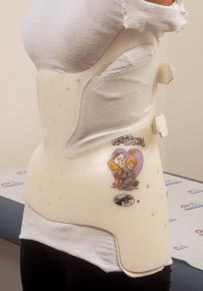
Image Source: bostonoandp.com
What is Bracing?
Bracing is a non-surgical treatment for scoliosis, a condition characterized by an abnormal curvature of the spine. The primary goal of bracing is to prevent further progression of the curvature, particularly during periods of growth in adolescents. Bracing does not aim to cure scoliosis, but rather to manage and control the progression of the curvature.
There are several types of braces commonly used in scoliosis treatment, and the choice of brace depends on factors such as the severity of the curvature, the location of the curve, and the age of the individual. Here are some common types of scoliosis braces:
- Boston Brace:
- The Boston Brace, also known as the TLSO (Thoraco-Lumbo-Sacral Orthosis), is a rigid brace that covers the torso from the underarm to the hips. It is one of the most widely used braces and is often prescribed for thoracic or thoracolumbar curves.
- Wilmington Brace:
- The Wilmington Brace is similar to the Boston Brace but is more low-profile and customized for each individual. It is often preferred for its reduced visibility under clothing.
- Charleston Bending Brace:
- The Charleston Bending Brace is a nocturnal brace, meaning it is worn only at night while the individual sleeps. It is designed to provide maximum correction during the period of spinal growth that occurs during sleep.
- Milwaukee Brace:
- The Milwaukee Brace is a full-torso brace that includes a neck ring. It is less commonly used today but may be prescribed for certain types of curves, especially those involving the upper part of the spine.
- TLSO Brace:
- TLSO stands for Thoraco-Lumbo-Sacral Orthosis, and it is a general term for braces that cover the thoracic, lumbar, and sacral regions. The Boston Brace and Wilmington Brace fall under this category.
- Chêneau Brace:
- The Chêneau Brace is a type of TLSO brace that is designed to be more customized and three-dimensional. It is often prescribed for specific curve patterns.
Is there an age restriction for Bracing?
Bracing for scoliosis is most commonly recommended for adolescents who are still experiencing growth, typically before reaching skeletal maturity. The rationale behind bracing is to control and mitigate the progression of the spinal curvature during periods of rapid growth. Once skeletal maturity is reached, the bones stop growing, and the risk of progression diminishes.
The general age range for considering bracing is often from pre-adolescence to mid-adolescence, roughly around 10 to 16 years old. However, the decision to prescribe a brace is individualized and depends on various factors such as the degree of curvature, the location of the curve, and the likelihood of progression.
It’s less common for bracing to be recommended for adults, as the bones have typically stopped growing, and the primary focus may shift to managing symptoms rather than preventing further progression.
Ultimately, the decision to use a brace and the specific type of brace are made based on a thorough evaluation by a healthcare professional specializing in scoliosis treatment. If you or someone you know is dealing with scoliosis and considering bracing, it’s essential to consult with a qualified orthopedic specialist or a healthcare professional with expertise in scoliosis management.
Does it work for Scoliosis?
The effectiveness of bracing for scoliosis depends on various factors, including the age of the individual, the degree and location of the spinal curvature, and compliance with the prescribed wearing schedule. Bracing is primarily aimed at preventing the progression of the curvature, particularly during periods of growth in adolescents.
Here are key considerations:
- Adolescent Idiopathic Scoliosis (AIS): Bracing is most commonly used in adolescents with idiopathic scoliosis (AIS). Research suggests that bracing can be effective in preventing the progression of mild to moderate curves in skeletally immature individuals.
- Compliance: The success of bracing is closely linked to the individual’s compliance with the prescribed wearing schedule. Braces are typically worn for a specific number of hours each day, and consistent use is crucial for optimal effectiveness.
- Degree of Curvature: Bracing is generally recommended for curves in the moderate range, typically between 25 and 45 degrees. It may be less effective for very mild curves or severe curves.
- Age: Bracing is most effective in individuals who are still growing and have not reached skeletal maturity. Once skeletal maturity is reached, the bones stop growing, and the potential for progression decreases.
- Type of Brace: Different types of braces are available (e.g., Boston Brace, Wilmington Brace), and the choice may depend on the specific characteristics of the scoliosis.
How long do I need to wear the Brace?
The duration and wearing schedule for a scoliosis brace depend on various factors, including the severity of the spinal curvature, the age of the individual, and the specific recommendations provided by the healthcare professional. Typically, braces are prescribed for adolescents with idiopathic scoliosis during the period of skeletal growth.
Here are some general guidelines:
- Daily Wear: Braces are typically worn on a daily basis, and the duration can range from several hours each day to the majority of the day and night. The specific wearing schedule is determined by the prescribing healthcare professional based on the individual’s needs.
- Number of Years: The duration of bracing can vary. In some cases, individuals may wear a brace for several years, especially during the period of rapid growth. The goal is to use the brace until skeletal maturity is reached, as the risk of scoliosis progression significantly decreases once the bones stop growing.
- Periodic Monitoring: Regular follow-up appointments with the orthopedic specialist are essential to monitor the progression of the scoliosis and assess the effectiveness of the brace. Adjustments to the brace may be made over time to accommodate changes in the individual’s growth and curvature.
- Transitioning Out of the Brace: Once an individual reaches skeletal maturity, and the risk of progression diminishes, the orthopedic specialist may recommend gradually reducing the wearing time of the brace. In some cases, the brace may be discontinued, while in others, it may be continued as a preventive measure.
How long has Bracing been available?
The use of braces for scoliosis has been a part of scoliosis management for several decades. The development and utilization of braces for scoliosis treatment began in the mid-20th century. The specific types of braces and their designs have evolved over time, with ongoing research and advancements in orthopedic care.
The Milwaukee Brace, one of the early types of scoliosis braces, was introduced in the 1940s. Since then, various other braces, such as the Boston Brace and TLSO (Thoraco-Lumbo-Sacral Orthosis), have been developed and widely used in scoliosis treatment.
Where can I see a Specialist for a Boston Brace?
Resources:
 Alternative Scoliosis Treatments
Leave a comment